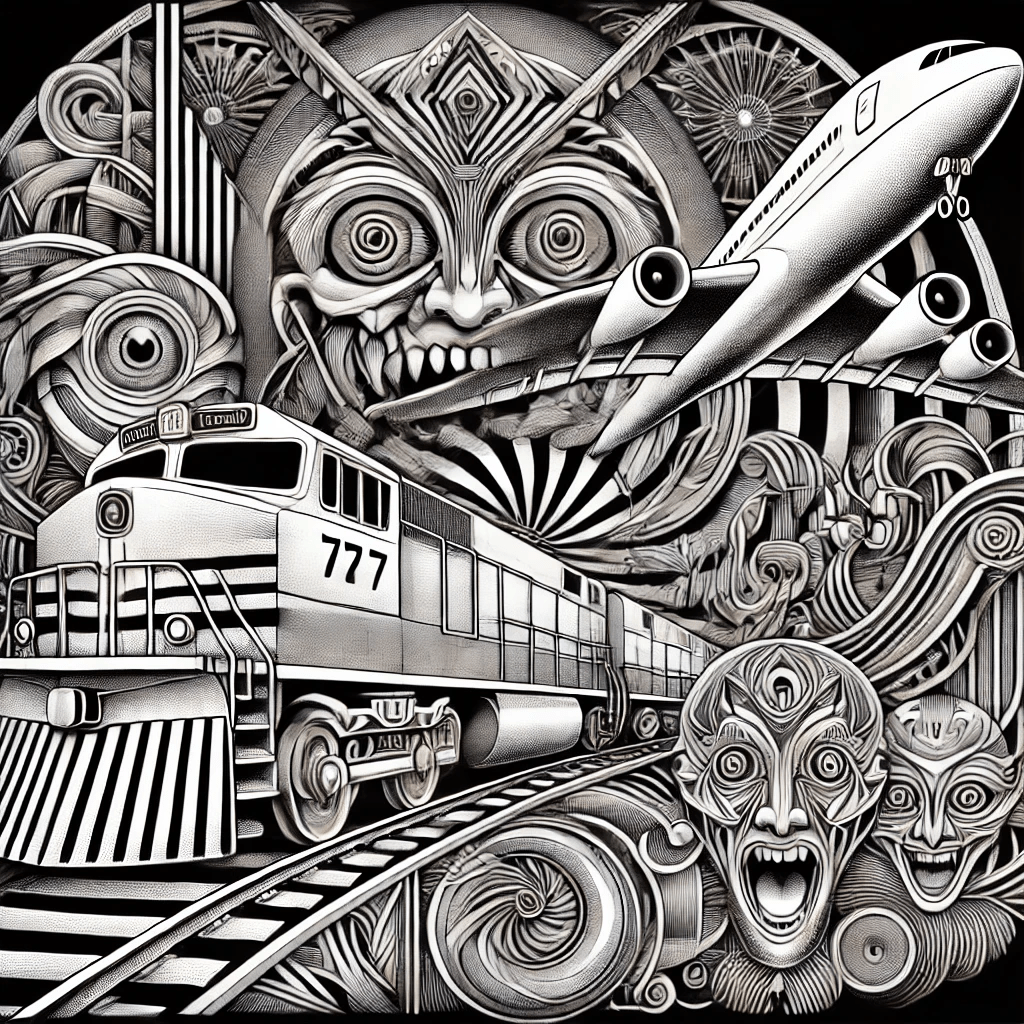
In recent years, the term “5D” has emerged as shorthand for a spiritual, vibrational utopia—a place where humanity transcends its earthly struggles and enters a higher dimension of peace, love, and enlightenment. But not everyone is invited to the party. In this cosmic split, the “high-vibration” crowd ascends to the fabled fifth dimension, while the rest of us, the so-called “5D losers,” are left holding the bag, stuck in the muck of 3D reality. Spoiler alert: I’m a 5D loser, and I’m not sure whether to laugh, cry, or just roll my eyes at the whole thing.
A History of the Eschaton
The 5D narrative isn’t just about self-improvement or transcendence—it’s about salvation. It taps into something humanity has always wrestled with: the belief that the world as we know it is coming to an end, and only a chosen few will be saved.
In the era of the robber barons, end-of-the-world fears were just as pervasive as they are today:
The Second Coming of Christ dominated Christian theology and gave rise to movements like the Social Gospel, which believed in preparing society for the arrival of God’s kingdom.
The Industrial Revolution brought its own apocalyptic imagery: fears of cities choking on smog, workers losing their humanity to machines, and the collapse of traditional ways of life.
Scientific innovations like Darwin’s theory of evolution challenged religious narratives, fueling existential dread about humanity’s place in the universe.
Today, our eschaton is shaped by artificial intelligence, climate change, and the fragility of governance. The fears may have changed in content, but not in essence. We’re still grappling with the same questions: What happens when the world as we know it collapses? And who will survive it?
The Draw of Transcendence
I understand why we’re so drawn to transcendental narratives. When the present feels overwhelming, the promise of something beyond this world—a higher dimension, a chosen timeline, an ascended state—offers relief. It’s not just an escape; it’s a way of making meaning out of chaos.
I don’t want to discount spirituality or the transformational power of a spiritual quest. Seeking something greater than ourselves can be beautiful, healing, and profoundly human. I am also a believer in the transformational power of love and forgiveness. But these concepts can also be corrupted. When spirituality becomes a way to sort humanity into the “saved” and the “lost,” or when it’s used to justify abandoning the world instead of working to heal it, it stops being transformational and starts being escapist.
Parallels to the Robber Barons
The robber barons of the Industrial Revolution also had their version of transcendence: they saw wealth as proof of divine favor and used it to justify inequality. Today’s 5D elites are no different, except instead of railroads and steel, their transcendence is about vibrational ascension and cosmic timelines.
Both groups are united by their ability to look past the suffering around them in pursuit of their own salvation: The robber barons believed the poor were simply “unfit” or part of God’s divine plan; the 5D crowd believes “low-vibration” people are destined to stay stuck in 3D, reincarnating endlessly while they move on to bigger, better dimensions.
My Own Fears
As much as I am intrigued and enamored with it, artificial intelligence scares me.. Climate change scares me. Governance and government scare me. These aren’t abstract fears—they’re immediate, real, and overwhelming.
So I understand the pull of ascension theories. I understand why people want to believe there’s a way out of this mess, a way to transcend the broken systems and crumbling infrastructure. I understand the longing for something greater.
But the problem is, transcendence doesn’t fix the here and now. If you abandon the world in pursuit of spiritual salvation, who’s left to deal with the consequences?
Why I’m a 5D Loser
I don’t vibrate high enough. I still care about mundane things like paying rent, maintaining relationships, and maybe getting the potholes in my neighborhood fixed. While others are meditating on quantum leaps, I’m busy Googling “how to afford a car repair.”
But being a so-called 5D loser isn’t just about logistics—it’s about rejecting the binary logic of ascension. The idea that half of humanity will ascend while the other half is left behind in the muck isn’t just improbable; it’s deeply dehumanizing. It’s the same false dichotomy that fueled the robber barons and the prosperity gospel: the chosen few versus everyone else.
My focus on artificial intelligence, blockchain, and their potential stems from my grounding in librarianship. In this field, we wrestle with technology, information, disruption, and distribution every day. My career in public libraries reflects my belief in the responsibilities we all share toward each other—regardless of our beliefs, stations, or frequencies.
The Bigger Question: Corruption vs. Transformation
The allure of transcendence will always be there, but it doesn’t have to mean abandoning the world. What if transformation didn’t require leaving anyone behind? What if spiritual evolution wasn’t about escaping but about digging in—about embracing the mess, the struggle, and the beauty of what it means to be human?
The real work isn’t in chasing 5D timelines or rewriting DNA. It’s in staying grounded, even when the ground feels like it’s crumbling. It’s in building something real—something inclusive, sustainable, and compassionate—right here in the 3D.
I don’t want to give up on magic or the potential of new technologies to help people. I don’t want to give up on spirituality, on the belief that we can create something better. But I also don’t want to lose myself in a vision that forgets the humanity of the present. Maybe being a 5D loser isn’t such a bad thing. Maybe it’s the only way to stay connected to what matters.
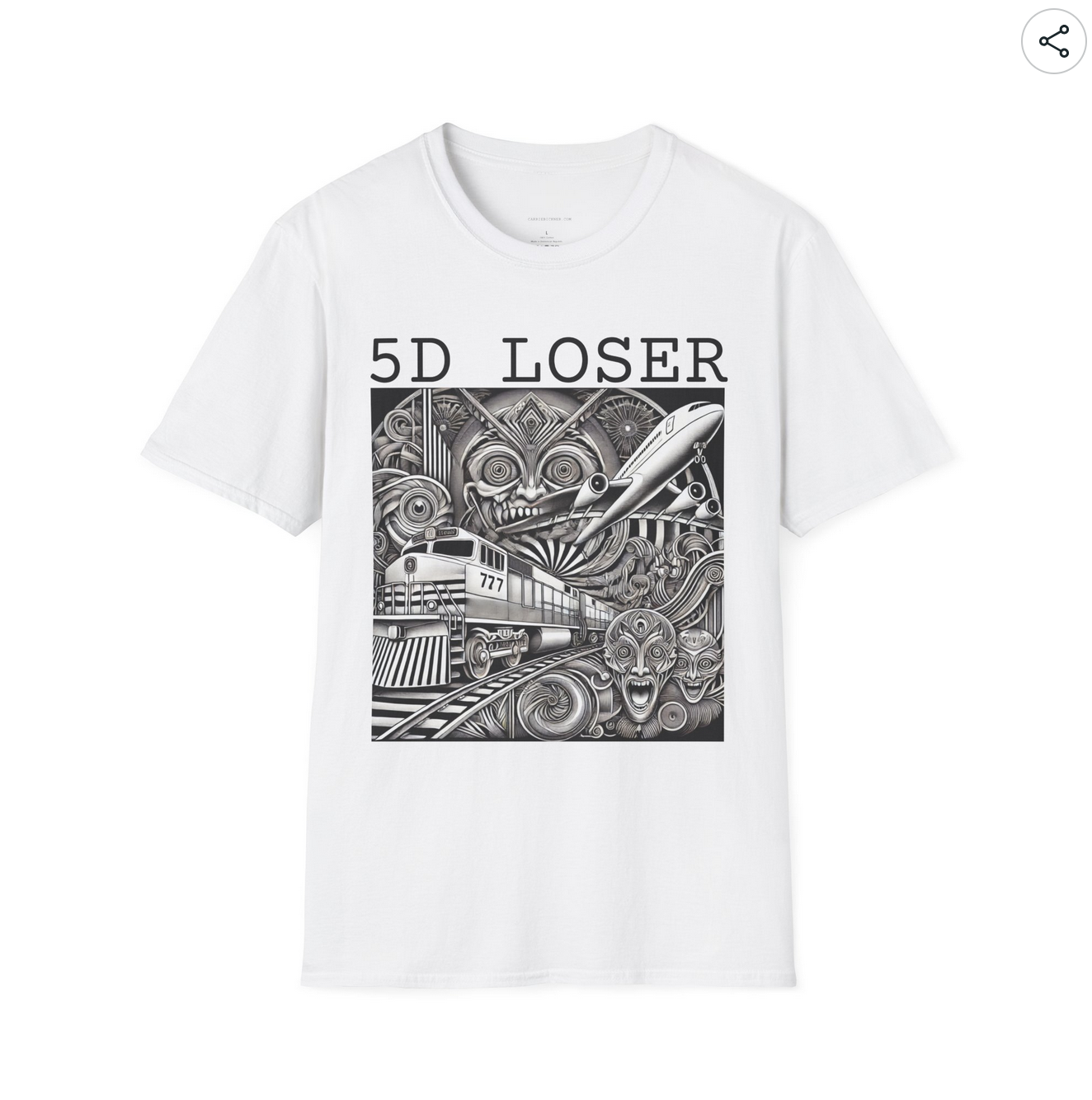
Are you a 5D Loser? Your 5D Loser T awaits in my printify shop.


 Carrie Bickner
Leave a comment