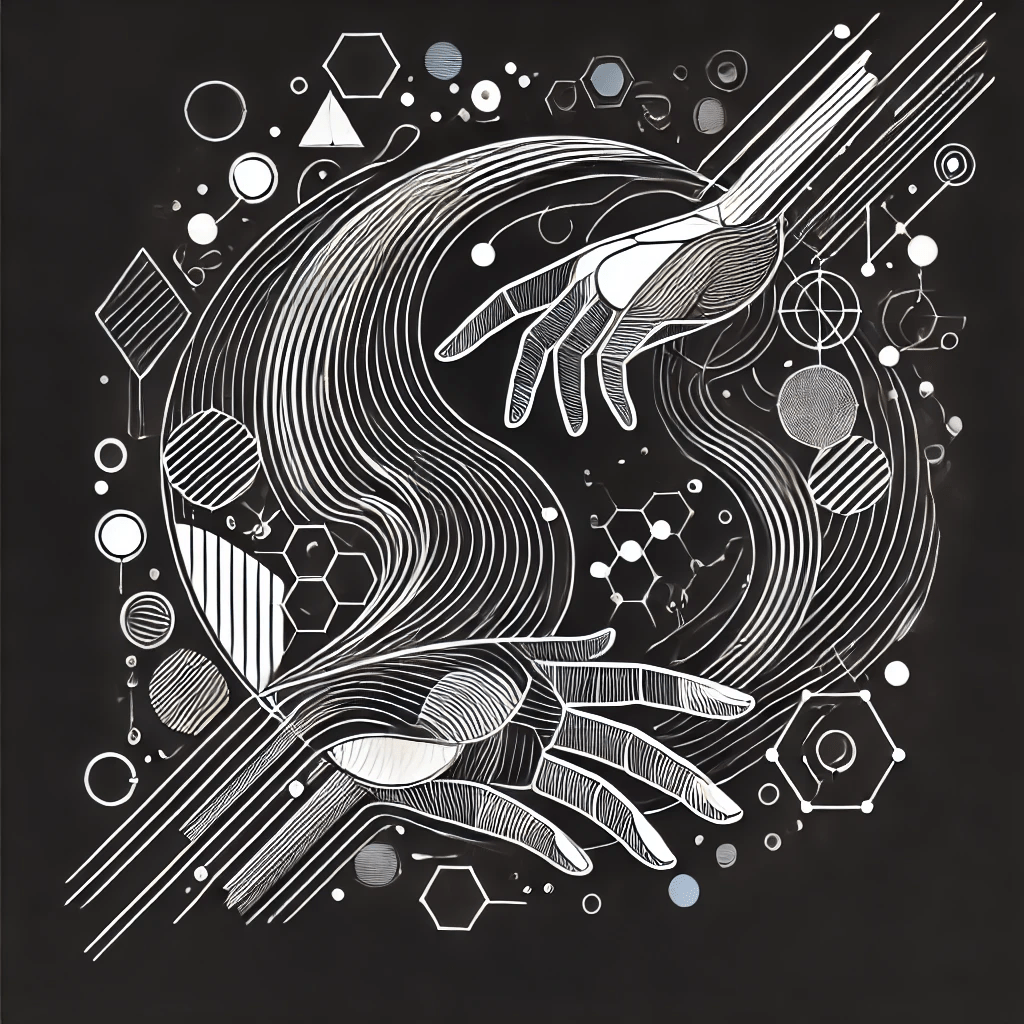
Artificial intelligence (AI) is often framed as a tool, a product of human ingenuity to be wielded or sold. But such a narrow view misses the point. AI is a resource—a generative, evolving phenomenon—more akin to forests, oceans, or networks of roads than to gadgets or software. Its transformative potential lies not in control but in cultivation, its stewardship requiring not dominance but care.
Stewardship is not about ownership. It is about relationship. To steward AI is to engage with something larger than oneself, a system whose contours we shape yet do not fully control. Like the ecosystems and infrastructures we rely on, AI demands patience, humility, and responsibility—qualities that transcend mere regulation.
Stewardship Across Domains
Natural Systems
1. Forests
Forests sustain life on scales both visible and invisible. They balance carbon, shelter species, and renew themselves with quiet persistence. Their stewardship requires balance: enough intervention to protect, but not so much as to disrupt. AI, like forests, is a dynamic system that thrives under measured care. Overuse or neglect risks collapse; stewardship ensures its continuity.
2. The Oceans
The oceans connect us. They are vast, unknowable, and shared. Their governance involves treaties, trust, and the recognition that no single entity owns the sea. AI, like the oceans, is a network that transcends borders, and its stewardship must honor this interconnectedness. It is not a possession but a collective inheritance.
Physical Infrastructure
1. Roads and Bridges
Roads are deceptively simple: they appear static but must be constantly maintained. Potholes form, bridges crack, and traffic evolves. Stewardship here is practical but vital, ensuring connectivity endures. AI is no different. It connects ideas, decisions, and systems, but without care, it fractures under the weight of neglect or misuse.
2. Plumbing and Water Systems
Plumbing ensures clean water flows in and waste flows out. Stewardship here is about resilience: pipes burst, reservoirs run low, demand shifts. AI requires the same vigilance. A leaky algorithm or misused dataset can disrupt the flow of trust, just as surely as a broken pipe floods a basement.
Cultural Systems
1. Libraries
Libraries are temples of knowledge. They collect, preserve, and offer access without discrimination. Their stewardship is a quiet labor of love: cataloging, repairing, and expanding access. AI, as a repository of human creativity and information, needs similar care—a balance of openness and preservation, ensuring it remains a resource for all.
2. Museums
Museums hold time. They curate artifacts of the past, contextualizing them for the present while safeguarding them for the future. Stewarding AI requires the same reverence: preserving its ethical foundations, curating its uses, and guarding against erasure or misuse.
Stewardship Through Collaboration, Not Regulation
Regulation imposes boundaries; stewardship fosters growth. Regulations are fixed, while stewardship adapts to the unknown. AI, as a dynamic and evolving system, needs the latter.
Consider MARTI a conceptual framework for collaborative stewardship. MARTI is not about control; it is about trust—peer-to-peer and node-to-node agreements that evolve alongside the systems they govern. Its principles are simple:
• Shared Responsibility: No single entity can or should own the future of AI.
• Flexibility: Governance must change as challenges emerge.
• Collaboration: Stewardship is not an individual act but a collective endeavor.
MARTI might fail. That’s fine. Stewardship, like any relationship, is iterative. The point is not perfection but persistence.
The Call to Collaborative Stewardship
To steward AI is to stand in humility before its potential. Like a forest or an ocean, it stretches beyond any single person’s grasp. Like a road or a library, it must be tended with care to serve those who rely on it.

 Carrie Bickner
Leave a comment